






Rotor & Stator Sizing
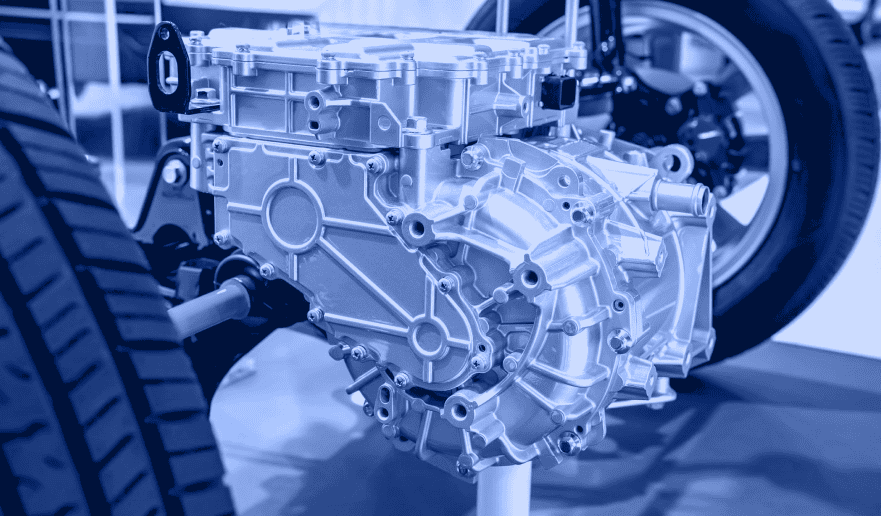
Generate initial rotor and stator sizing and geometry given torque and speed requirements.
Multi-Physics Simulations for Electric Motor Design & Selection
Product Overview
E-Motors today consume approximately 45% of the global electric power. A meaningful impact to a greener tomorrow can be made by making these E-Machines more efficient and by ensuring that they are optimized for the end-use application.
To enable this GT-FEMAG offers a unique solution for motor designers to optimize the electromagnetics, thermal, mechanical design; and for system integration engineers to analyze the e-motor performance by digitally integrating the motor and system models.
Mature, Accurate Electromagnetics
Development of FEMAG started in 1982 by Professor Reichert at the Institute for Electrical Machines of ETH Zurich and has been continuously developed by pioneering research institutes since then. Today, FEMAG has developed into a platform for motor designers with state-of-the-art finite element electromagnetic, thermal and mechanical solutions for a plethora of motor types used in the industry. Post acquisition by Gamma Technologies, developer of system-level simulation platform GT-SUITE, research and development will continue to be led by the FEMAG Consortium, which includes GT’s Center of Excellence for Electric Drives, University of Aalen, and University of Hannover.
FEMAG will continue to be offered as a standalone product by Gamma Technologies and GT-FEMAG will be the integrated solution with the workflows for motor designers and system engineers.
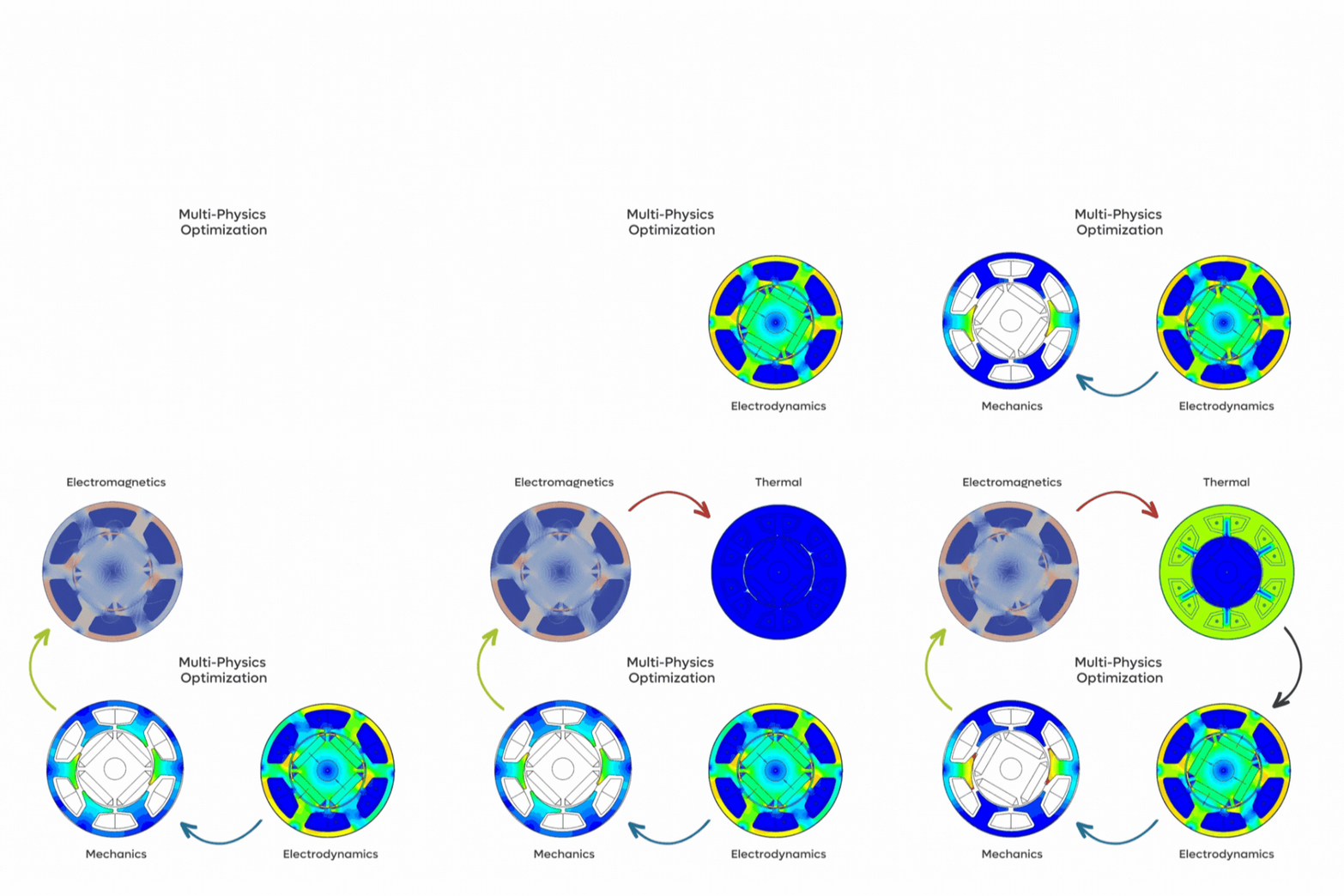
Cross-Domain Motor Design
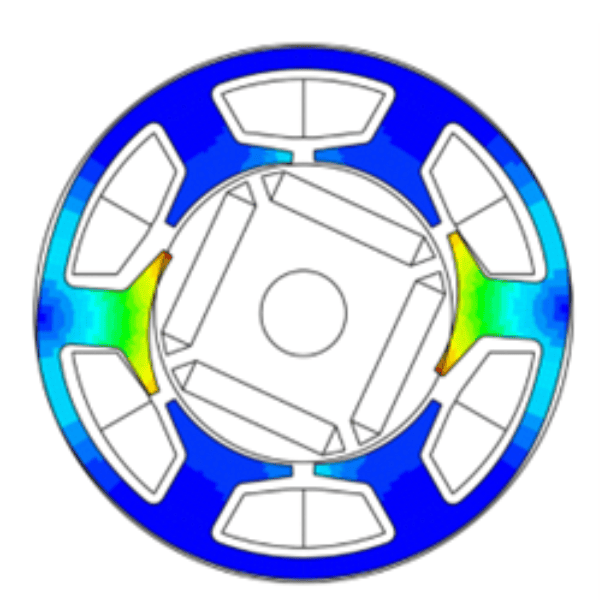
FEMAG not only models the electromagnetic behavior of a motor, but also the thermal behavior, mechanical behavior, and its transient behavior in an electric circuit. With its foundation rooted in multi-physics, FEMAG can be used to solve critical motor design challenges that pure electromagnetic modeling software can’t, such as mechanical deformation studies that consider electromagnetic forces, centrifugal forces, and thermal expansion or magnet de-magnetization studies that consider magnet press fit and thermal expansion forces.
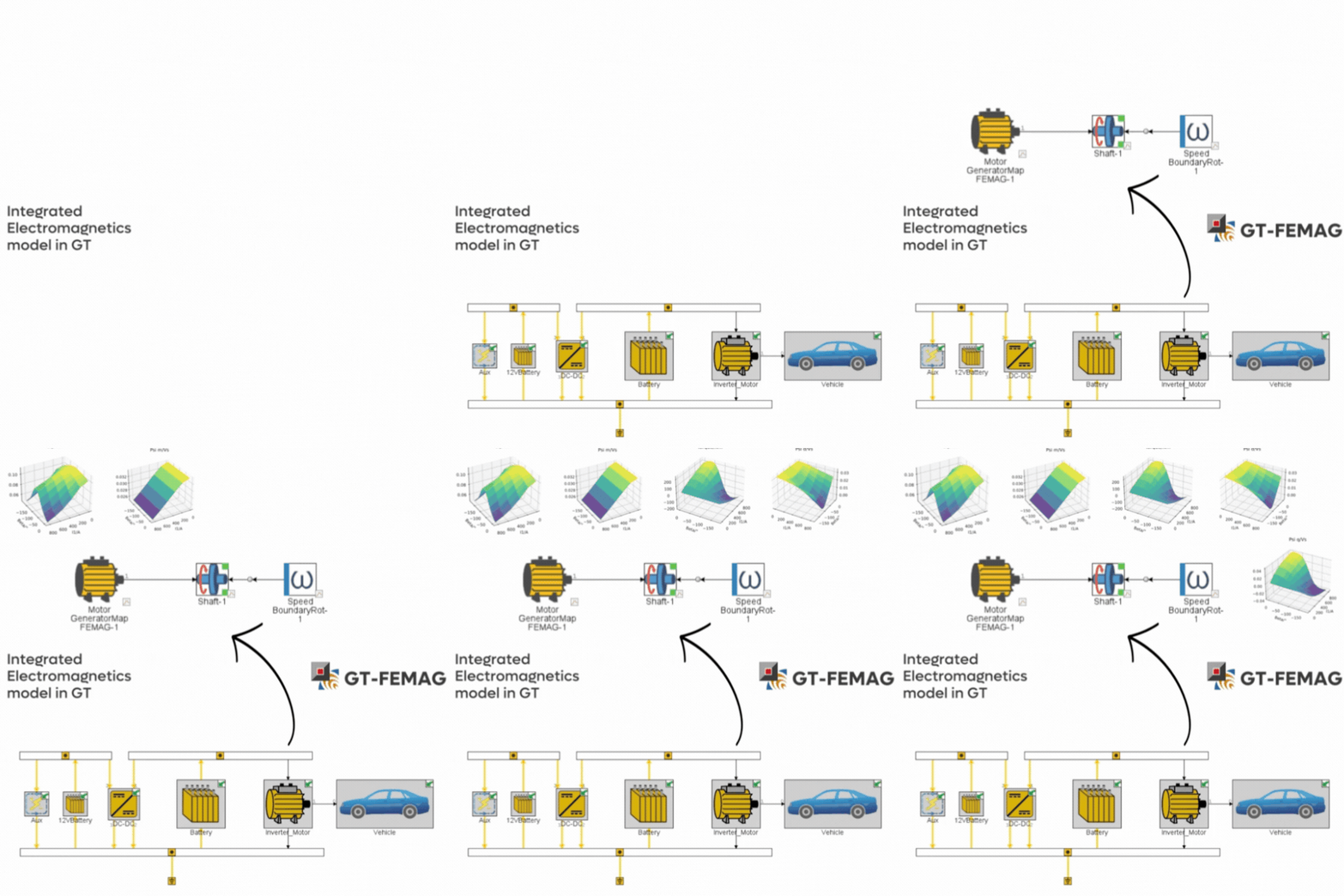
Automated Workflows
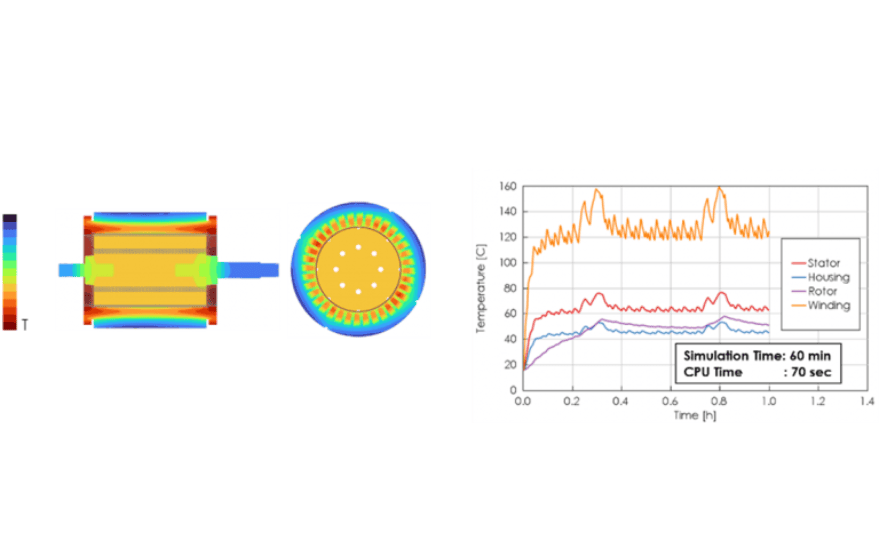
Integration of FEMAG into GT-SUITE with GT-FEMAG has enabled seamless and automated workflows to be setup to have FEMAG results feed GT-SUITE system-level models with accurate motor inputs, such as the automatic generation of efficiency maps, automatic generation of equivalent circuit models (i.e Ld, Lq models), and automatic generation of local heat rejection maps for transient thermal analysis.
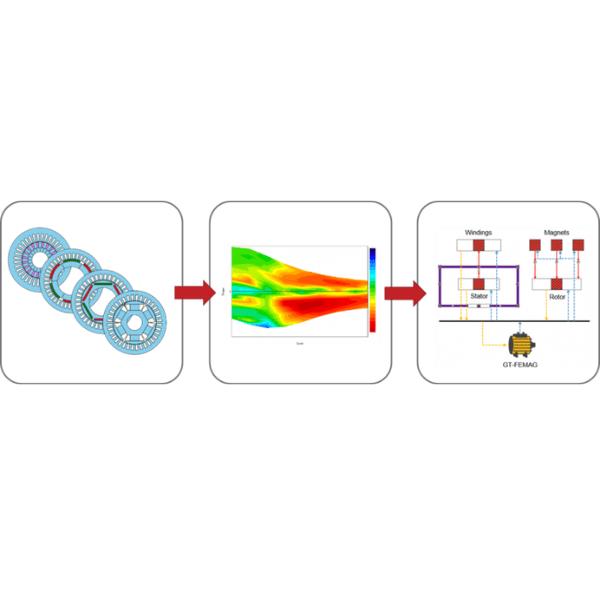
With seamless workflows available between FEMAG and GT-SUITE, maps of the global efficiency and local losses can be used in GT’s transient system-level and thermal modeling environments to study warmup and cool down events in electric drivetrains. To learn more, see the conference presentation here.
Using GT-PowerForge, FEMAG, and GT-SUITE for detailed inverter modeling, electromagnetics modeling, and harmonic analysis, respectively, users can understand the effects of the inverter design, motor design, and mechanical design on noise, vibration, and harshness of the entire electric powertrain.

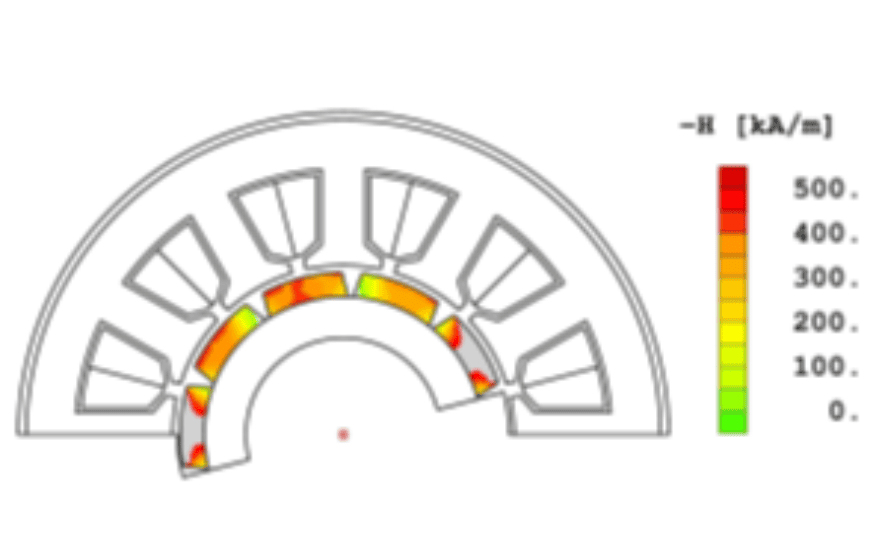
With transient-capable electromagnetic and thermal solvers, users can analyze the demagnetization of permanent magnets during crucial safety events, such as short circuits.
Advanced Features
Complete electromagnetic, thermal, and mechanical analysis for electric motor design and optimization in GT-FEMAG.
Generate initial rotor and stator sizing and geometry given torque and speed requirements.
Generate maps of the global efficiency and local losses for system-level simulation.
Define any motor geometry with parameterized geometry, custom geometry with CAD import, or create custom parameterized geometry templates.
Calculate natural frequencies and mode shapes with modal analysis.
Calculate stator deformation with electromagnetic forces, centrifugal forces, and thermal expansion all considered.
Study de-magnetization of magnets due to both thermal expansion and press fit forces.