




Environmental Compliance
The trend toward increasingly stringent environmental regulations imposed by international organizations and local governments is driving the need for innovative solutions in onboard power generation
Industries
Supporting propulsion system modeling, thermal management, and energy efficiency analysis for rail applications.
INDUSTRY OVERVIEW
The trend toward increasingly stringent environmental regulations imposed by international organizations and local governments is driving the need for innovative solutions in onboard power generation
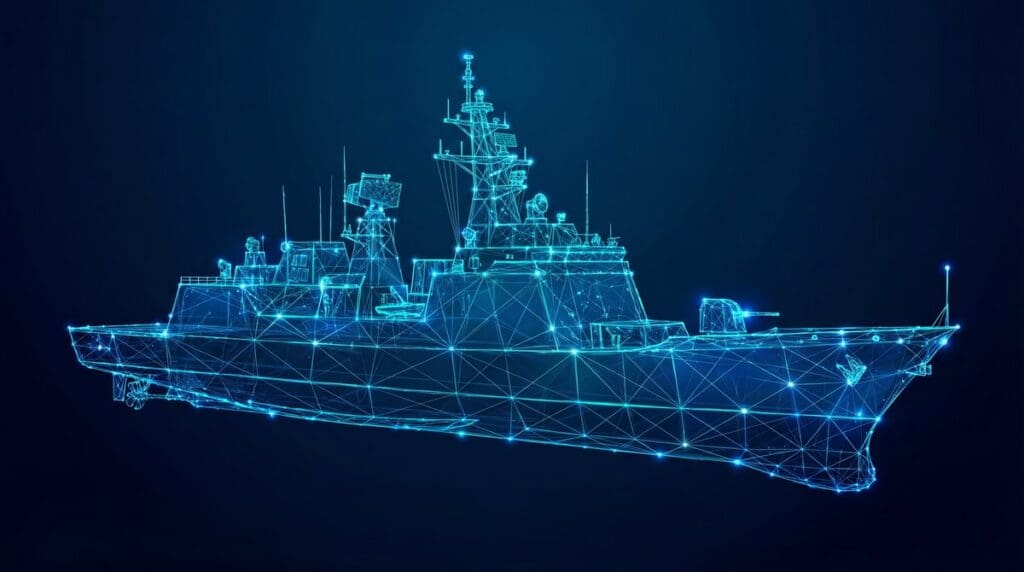
GT-SUITE’s system simulation solutions enable shipowners, operators, and marine systems manufacturers to evaluate innovative fuel technologies. GT-SUITE enhances development efficiency in critical areas such as emission reduction and alternative fuel integration.
The industry faces increasing pressure to improve fleets and ports operational efficiency and reduce emissions and costs while ensuring compliance with the industry standards.
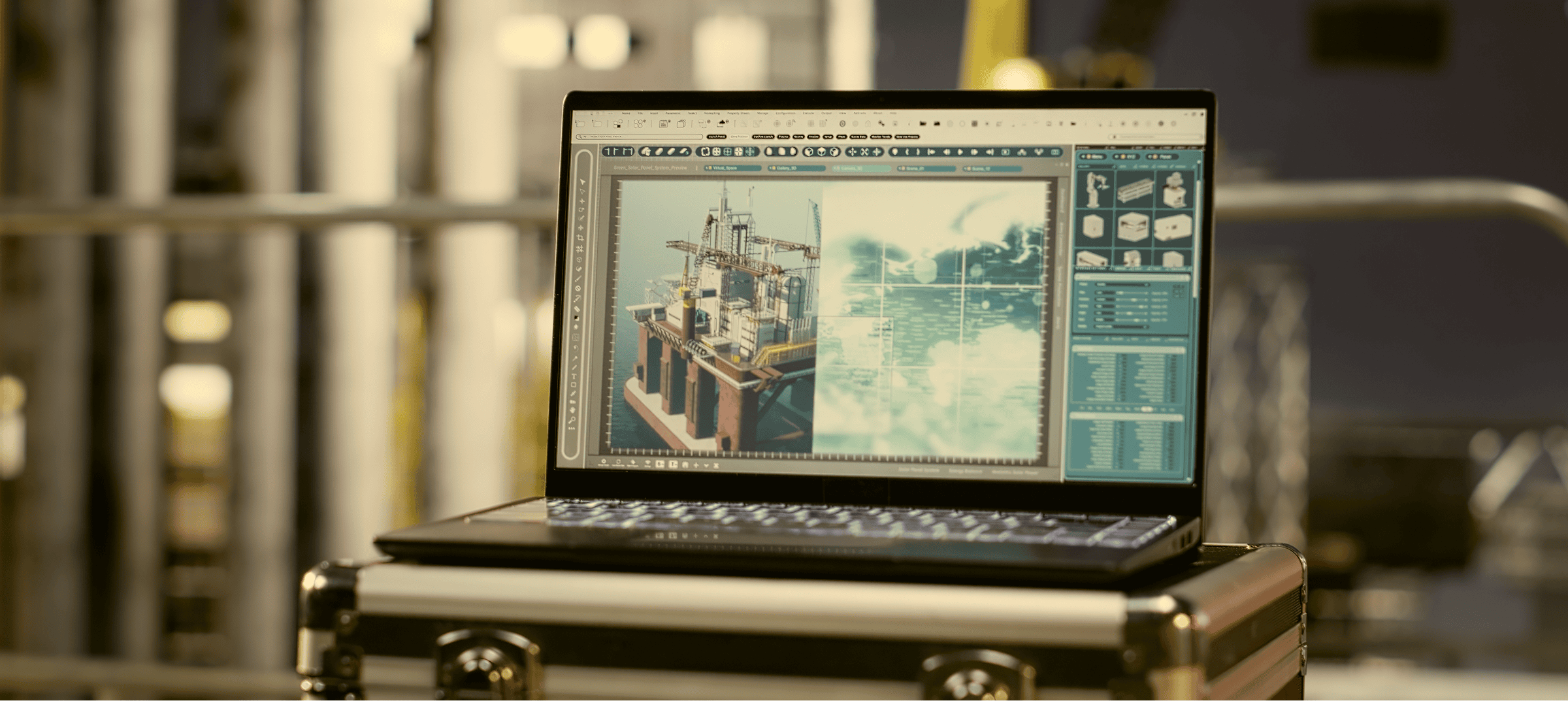
By leveraging the power of GT-SUITE, it is possible to create a complete ship simulation, including propulsion, energy/thermal management, and aftertreatment, to holistically optimize overall ship system performance. The extensive model library enables the testing of various ship system designs.
Safety and the avoidance of downtime are mission critical targets for all stakeholders, especially with the adoption of novel technologies and control strategy concepts.
GT-SUITE’s multi-physics platform enables the virtual commissioning of marine systems and control strategies, allowing faults to be identified and resolved early in the design phase within a safe virtual environment. By achieving robust system designs through physics-based simulation, the need for extensive physical testing is minimized, significantly reducing development costs while ensuring reliable system and control performance.
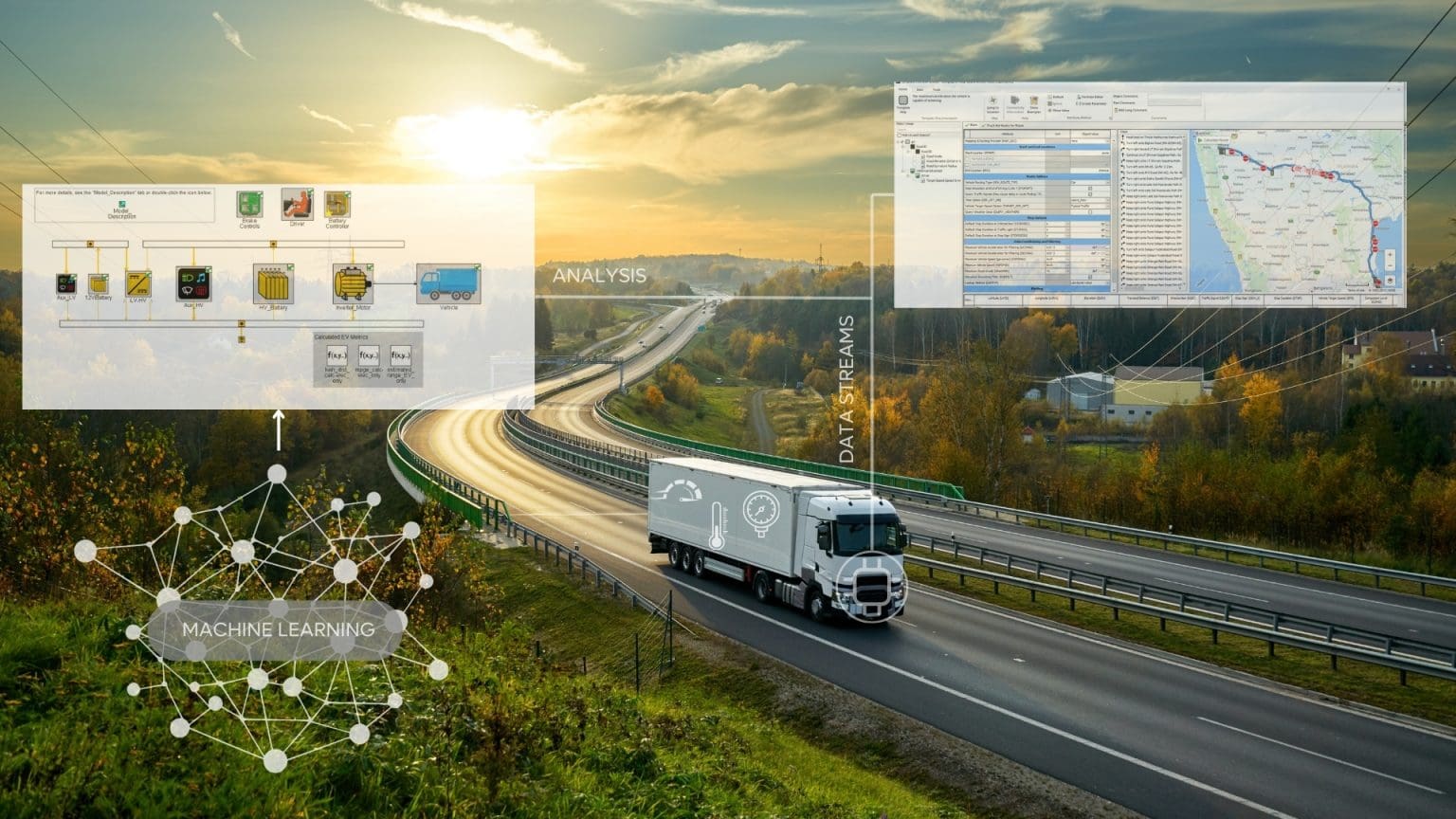
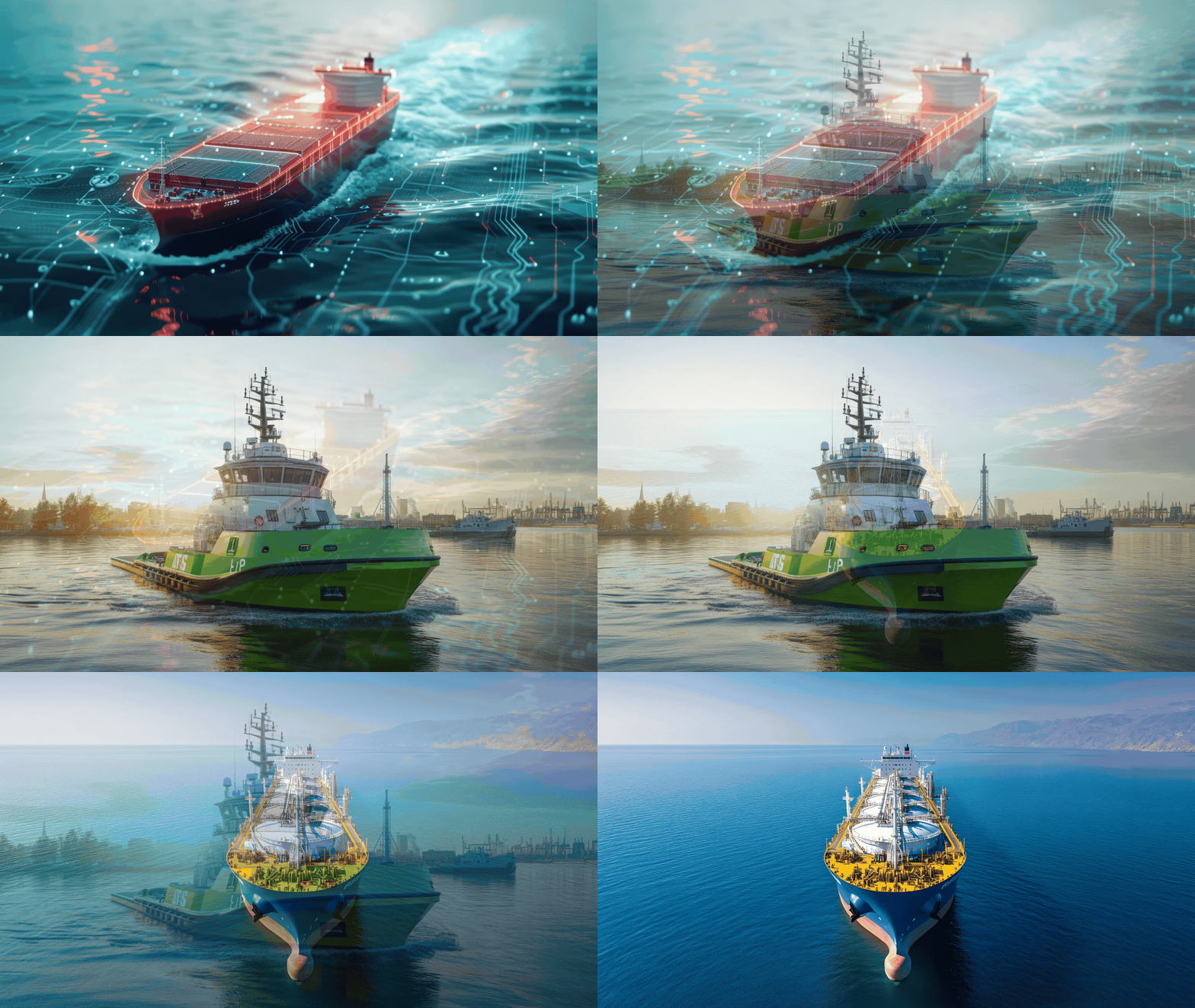
There is a pressing need for innovation in the marine industry through the implementation of advanced digital solutions. Technologies like Digital Twin and Machine Learning drive alternative fuel adoption, improve system performance, and boots operational efficiency and sustainability.
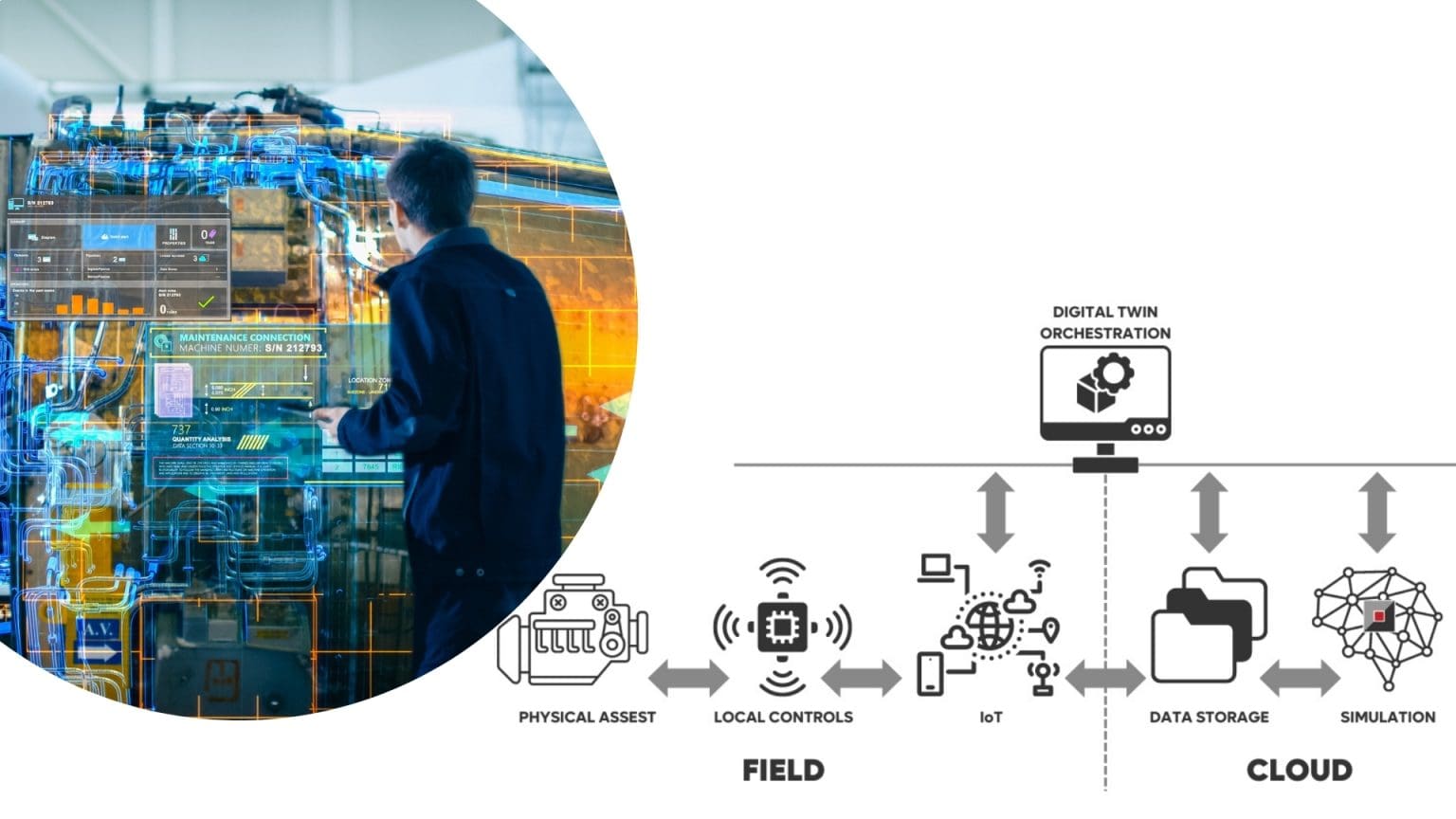
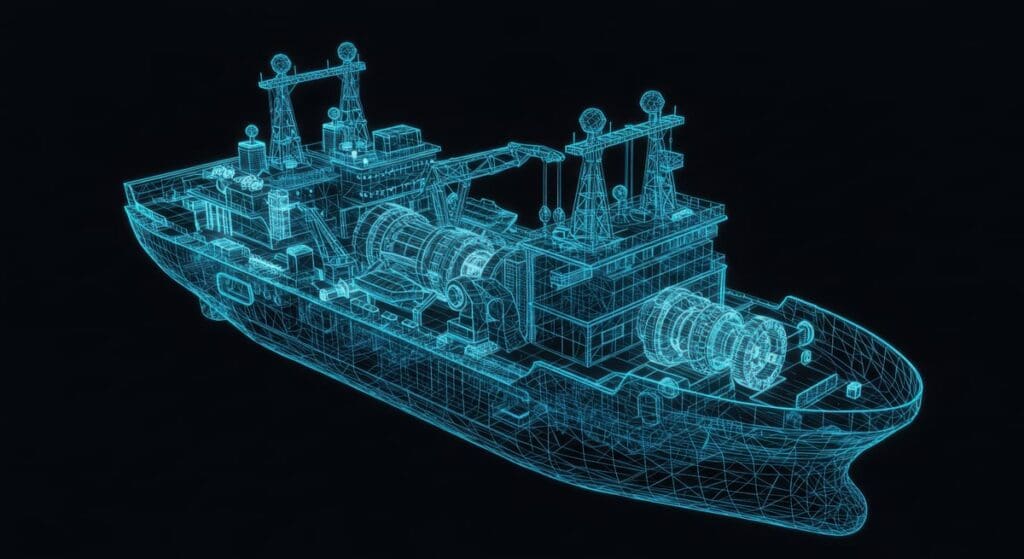
GT-SUITE's multi-physics, model-based approach empowers the creation of digital twins for vessels, individual components, and integrated systems. These digital twins enable shipowners and developers to conduct real-time simulations, predict faults, and anticipate maintenance needs, ensuring operational efficiency.
GT Solutions for Marine Industry
Marine developers and engineers are increasingly exploring alternative fuels to reduce emissions. Hydrogen, ammonia, and methanol each introduce unique design and operational challenges, requiring optimized turbocharging, fuel systems, and combustion strategies to minimize fuel consumption and costs.
Methanol’s high heat of vaporization affects gas exchange through charge cooling, making accurate fuel evaporation and film transport predictions critical, particularly during transients and cold starts. GT-SUITE’s predictive spray and evaporation models help optimize methanol injection and combustion for efficient performance.
While ammonia is carbon-free, its low flame speed and potential for high NOx emissions often necessitate hydrogen blending or dual-fuel operation. GT-SUITE’s Advanced Combustion Toolset (ACT), predictive pre-chamber combustion models, dual-fuel capabilities, and chemical kinetics solutions enable accurate combustion and emissions analysis to support optimized ammonia engine designs.
GT-SUITE and GT-POWER xRT help engineers design and optimize engines for net-zero-carbon fuels while reducing development time and cost. Digital Twin and machine learning capabilities further enable predictive maintenance and fault detection using real-time vessel data.
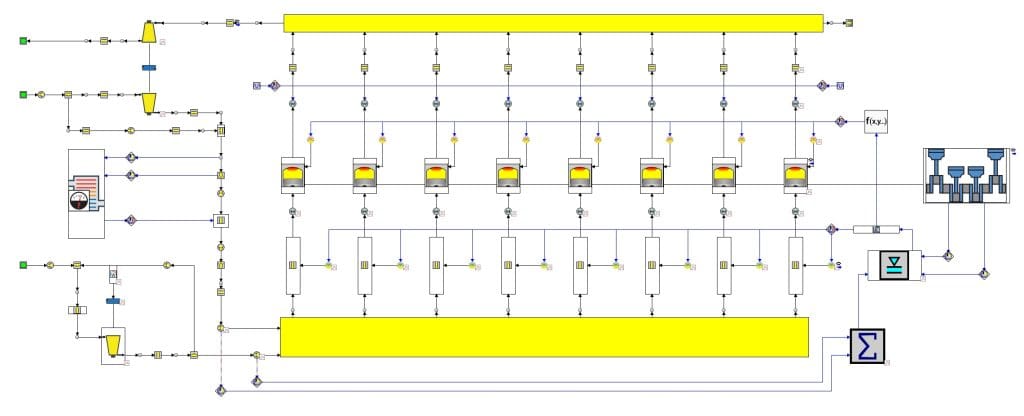
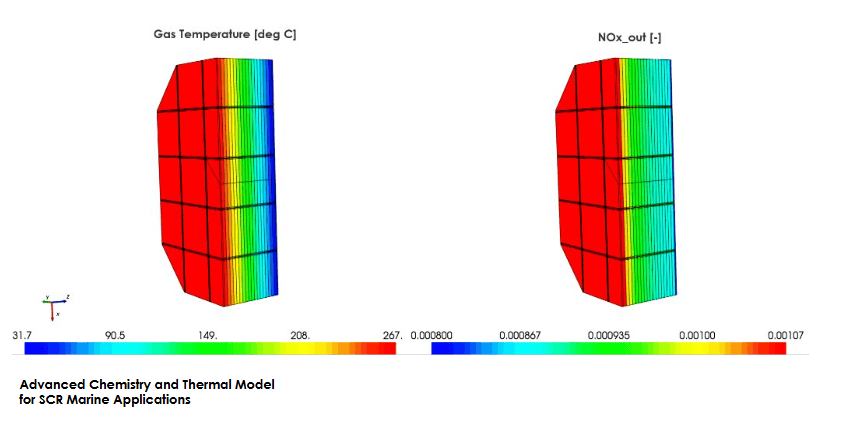
Gamma Technologies provides a unified platform for exhaust aftertreatment and chemical systems with GT-xCHEM, a powerful tool for designing and analyzing efficient, reliable propulsion systems while reducing costs and accelerating time-to-market.
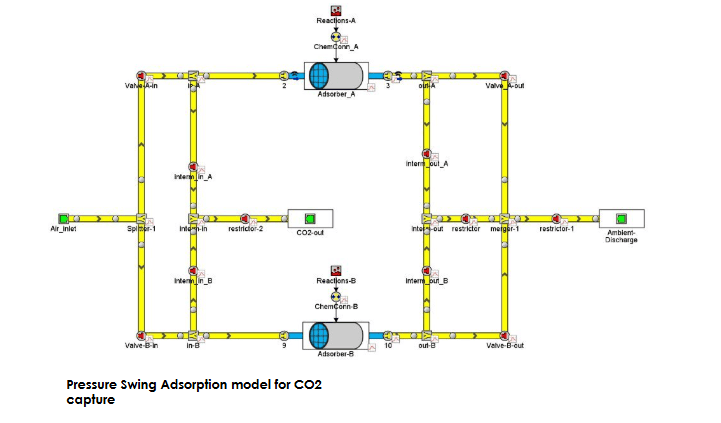
GT-xCHEM offers advanced capabilities for modeling complex exhaust aftertreatment layouts and CO₂ capture and storage systems. Its high-fidelity thermal and chemical models address hybridization challenges and ensure compatibility with alternative fuels, enabling engineers to tackle the unique demands of modern propulsion systems.
Through co-simulation with engine and propulsion systems, GT-xCHEM facilitates the optimized design of emissions mitigation technologies for all types of propulsion systems. This integrated, multi-physics approach ensures compliance with stringent regulations while enhancing fuel efficiency and overall system performance.


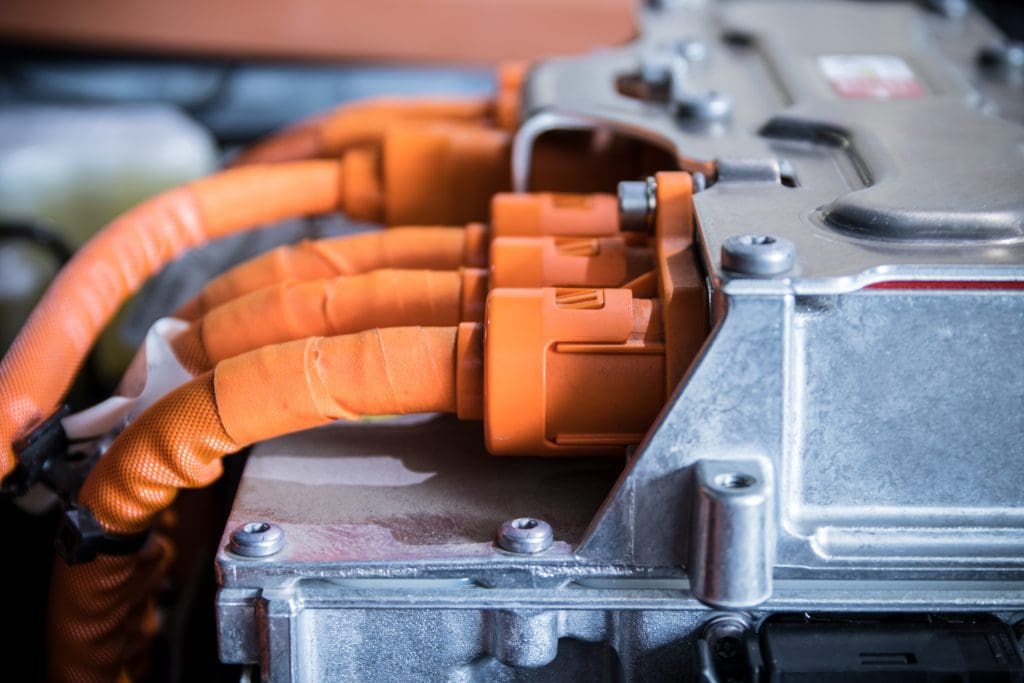
Ship batteries are becoming essential components of modern vessels. GT-SUITE systems simulation solution addresses the challenges of battery design, integration, sizing, and thermal management. For a more detailed modelling of marine batteries, cell designers and OEMs rely on GT-AutoLion, the industry-leading lithium-ion battery simulation software. Using a fast and reliable physics-based approach, GT-AutoLion predicts performance, degradation, ageing, and safety for any Lithium-ion cell.


GT-SUITE provides advanced modeling capabilities for PEM and SOFC fuel cell systems, helping engineers maximize efficiency, reduce aging, and accelerate development through predictive physics-based models integrated with flow, thermal, electrical, and control systems. Optimization and DOE tools, including ECMS and genetic algorithms, support fuel cell and battery sizing, power management, and total cost of ownership reduction, while real-time solutions streamline controls calibration.
The platform supports cryogenic and multiphase fuel storage, fuel reforming for methane, ethanol, methanol, and ammonia, as well as ammonia cracking processes. For PEM fuel cells, dedicated water and thermal management models help prevent dry-out, flooding, overheating, and icing.
With detailed stack and system-level component models, GT-SUITE enables the design and optimization of robust, efficient fuel cell systems and powertrains for real-world applications.
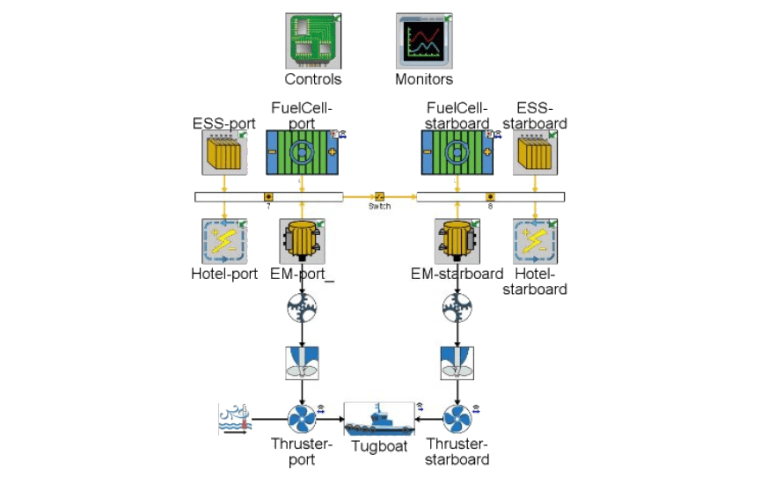

Driven by the increasing environmental concerns and regulations, the shipping industry is transitioning towards hybrid propulsion systems and power supply architectures. There are several challenges that marine developers face:
GT-SUITE offers model resolution ranging from 0D to 3D calculations. This allows the engineers to design or retrofit vessels’ propulsion systems and optimize power distribution logic, which results in improved efficiency, longevity, and adaptability. By using the systems simulation solutions marine developers can save time and money on physical testing, reduce production costs, and improve the reliability of the hybrid propulsion systems.
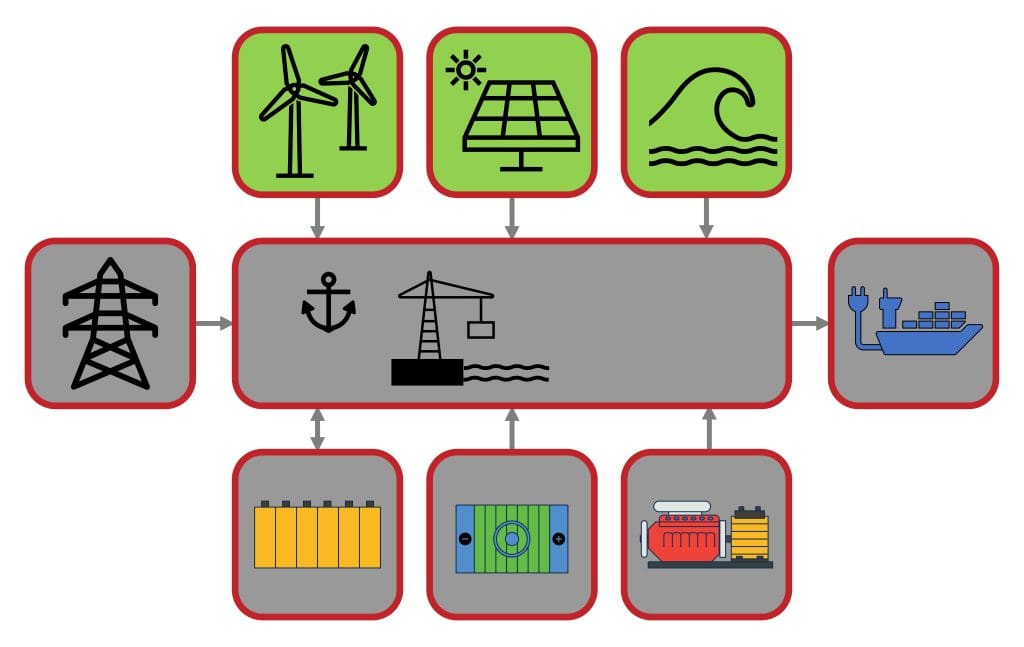

Marine operations involve highly dynamic and complex systems, requiring sophisticated simulation and modeling capabilities to create accurate digital twins.
Digital twins create real-time virtual replicas of ships, ports, or entire fleets, offering unmatched insights into system performance, maintenance requirements, and operational efficiency.
By leveraging GT-SUITE’s Digital Twin capabilities, the developers can: