


← Back to All Solutions

Solutions

Combustion and Emissions

From predictive SI and diesel combustion to detailed chemical kinetics for knock and emissions, GT-POWER provides the accuracy and speed needed to develop cleaner, more efficient engines across all combustion concepts and fuel types.

COMBUSTION & EMISSIONS

Solution Highlights

  • Predictive combustion models for:
    • Multi-pulse direct injection diesel
    • Port and/or direct injection spark ignition
    • Dual-fuel (premixed fuel-air mixture ignited by direct injection)
    • Pre-chamber jet ignition
    • HCCI
    • User code
  • Imposed burn rate profiles for any combustion concept (derived from cylinder pressure analysis, Wiebe, map based, neural network, etc.)
  • Predictive emissions models for NOx, HC, CO and soot
  • Predictive cycle to cycle variation (CCV) models
  • Predictive knock models
  • New sub-models for alternative fuels including laminar flame speed models for hydrogen, ammonia, and methanol as well as a predictive fuel stratification model for direct injected hydrogen
MicrosoftTeams-image-2-scaled-570×460-1

SI TURB

Predictive SI Combustions

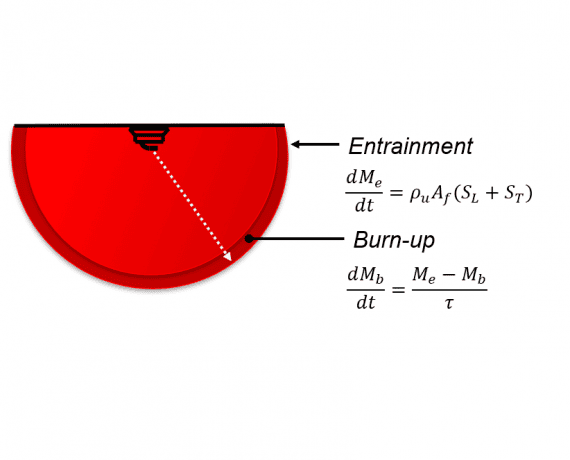
With SI Turb, users are provided a two-zone, entrainment and burn-up model which also include:

  • Combustion rates predicted based on in-cylinder conditions
    • Head and piston crown geometry from 3D-CAD
    • Spark Timing and Location(s)
    • Fuel Properties
    • Mixture Composition
    • Turbulence (incl. tumble and swirl effects)
  • High accuracy, fast run times
    • Detailed Analysis (Knock, CCV, Emissions)
    • Fast Running Models
SITurb-GT-SUITE-1-570×460-1

DIPULSE

Predictive Diesel Combustion

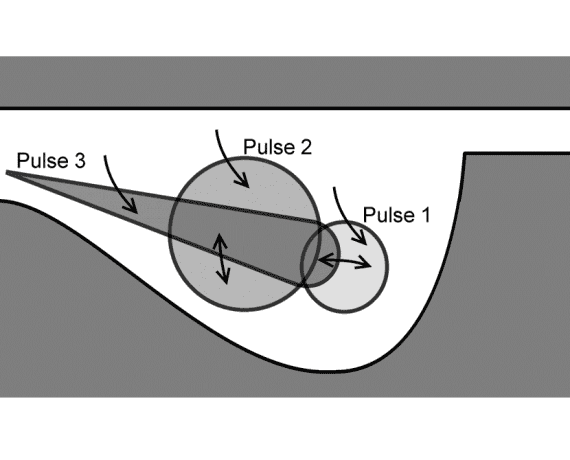
With DIPulse, users are provided a phenomenological combustion model that’s designed to handle modern multi-pulse injection.

DIPulse capabilities include:

  • Combustion rate predicted based on in-cylinder conditions
    • Pressure and temperature
    • Mixture composition (fresh air, fuel, EGR/residuals)
    • Injection timings and profiles
  • Fast run time
  • Real Time/HiL capable
DiPulse

FAST CHEMISTRY SOLVER

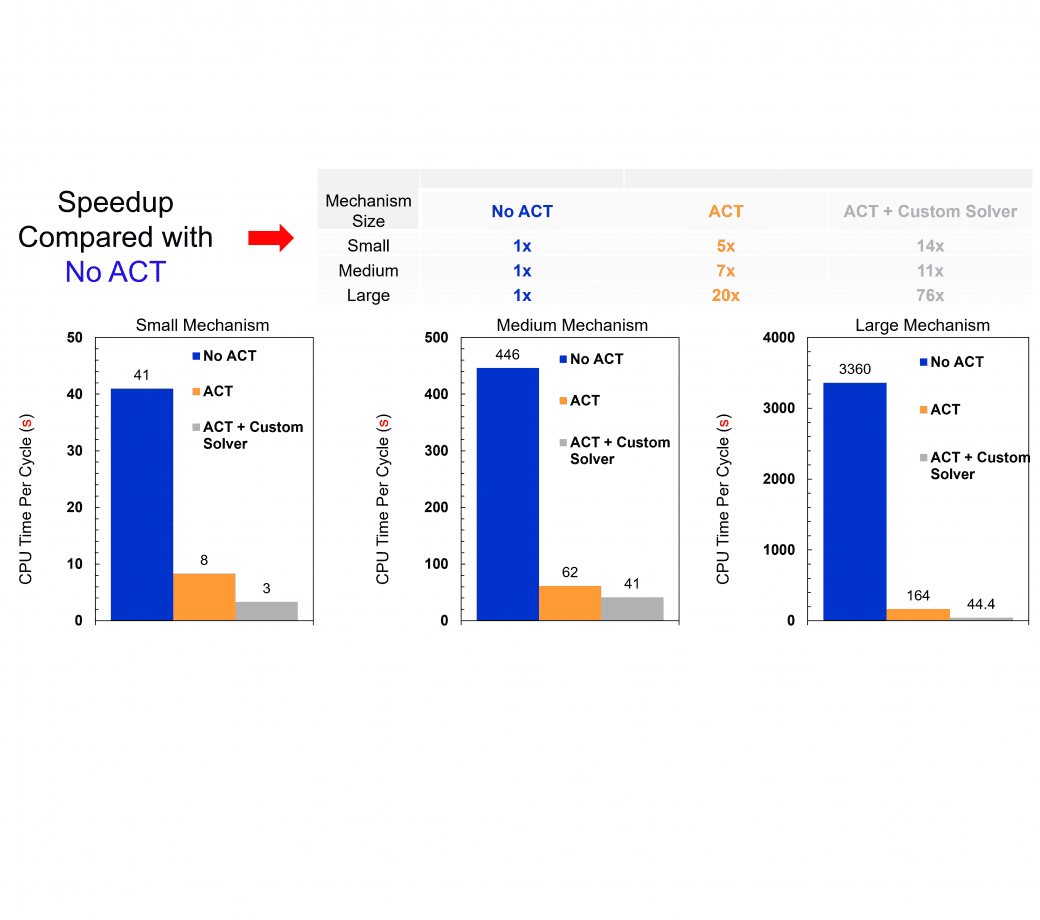
Magnitude Speed Up with ACT

ACT (Advanced Combustion Toolset) is a collection of productivity tools that enable both increased model fidelity and faster runtimes. It includes a state of the art chemical kinetics solver that offers significantly improved computational times, enabling usage of more detailed mechanisms. Potential applications for detailed kinetics include:

  • Chemistry in Cylinder Unburned Zone (Knock)
  • Chemistry in Cylinder Burned Zone (Emissions)
  • Chemistry in Pipes/Flowsplits (Exhaust Manifold Oxidation)
ACT Speed up

Advanced Features

Comprehensive Engine Combustion Simulation

Explore advanced modeling capabilities for combustion analysis, emissions prediction, knock simulation, and thermal performance evaluation across a wide range of engine technologies.

check mark icon

Universal Combustion Mode and Fuel Support

Model any combustion concept, including SI, diesel, dual-fuel, pre-chamber, HCCI, and more, with any fuel, including hydrogen, ammonia, and methanol. This breadth of coverage eliminates the need for separate tools across different engine development programs.

check mark icon

Predictive Knock Detection and Boundary Analysis

Evaluate knock onset, intensity, and boundary conditions using detailed chemical kinetics or induction time integral models, enabling engineers to reduce reliance on costly prototype testing during combustion development.

check mark icon

Mean Cycle and Cycle-to-Cycle Variation Modeling

Simulate both ensemble-averaged mean cycle combustion and individual cycle-to-cycle variation within a single modeling environment, providing a complete picture of combustion stability and variability.

check mark icon

Detailed Chemical Kinetics for Emissions Prediction

Calculate any emissions species, including NOx, HC, CO, soot, and beyond, using detailed kinetics or partial equilibrium solvers, delivering the accuracy required for regulatory compliance and emissions optimization work.

check mark icon

Coupled In-Cylinder Flow, Turbulence, and Combustion

GT-POWER's in-cylinder flow and turbulence model is fully coupled to combustion and heat transfer, ensuring that changes to geometry, valve events, or operating conditions propagate consistently across all physics simultaneously.

check mark icon

Finite Element Cylinder Wall Temperature Integration

Combustion models interact directly with the cylinder finite element wall temperature solution, enabling accurate prediction of thermal loads, part load behavior, and dynamic operation, which is critical for durability and efficiency analysis.

Connect with an Expert

Looking for guidance on a systems simulation challenge or project? Fill out the form below and our team will reach out to discuss how we can help.